

What a piece of work is “Man”! It is a word which was once a building-block of poetry, of philosophy, of mysticism, and of scholarship; a word which at one time expressed all the deep complexities of the condition of individual and group consciousness. It is also a word which deserved its death, a word which masked beneath its high ideals and lofty usage a deeply-written prejudice of epic proportion—a prejudice which afflicted even the most liberal of speakers. It was a word which appealed to principles which it itself did not and could not uphold, and in its failure exposed a fundamental insincerity stalking the goals of universalism. Yet, though the demise of “Man” deserves celebration, we should be careful of losing sight of what “Man” meant. For though the word itself was a failure, its aspirations were not, and, if we consign its project forever to the tarnished wastebin of the chauvinist past, we risk tarnishing the project of unity and liberation after which it vainly sought.
 For many years, “Man”—very often with with a capital M, and thus on par with English’s two other capitalized abstractions, “I” and “God”—was the unproblematic way of describing humans as a unity. Geographers and conservationists could use it to portray the common features of settlement, inhabitation, and relationship with the earth, as in George Perkins Marsh’s Man and Nature, Dudley Stamp’s Man and the Land, or the 1955 Wenner-Gren symposium Man’s Role in Changing the Face of the Earth. Lewis Mumford could write in 1944 on The Condition of Man, and André Malraux’s book La condition humaine was translated into English by Haakon Chevalier in 1934 as Man’s Fate. Inscribed above the door to Emerson Hall at Harvard, home to the philosophy department, is a quote from the Psalms: “What is Man that thou art mindful of him?”
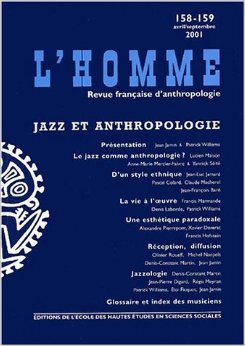
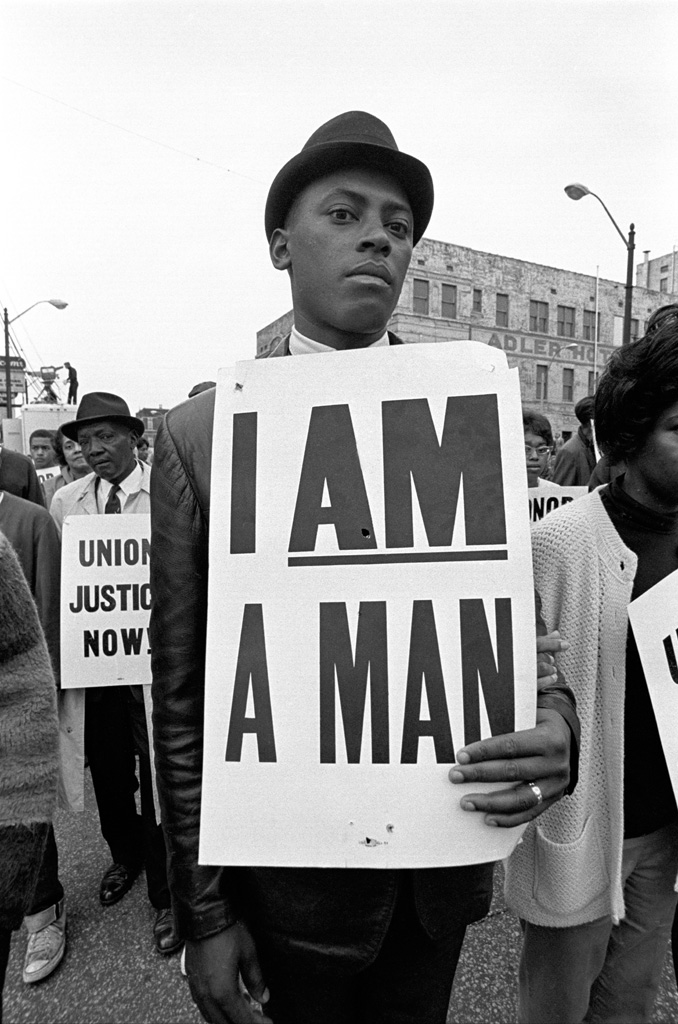 With its capital M and its unitary emphasis, “Man” pointed towards the high ideals of cultural universalism. Claude Lévi-Strauss, who claimed that people around the world had the same basic characteristics as people, named his journal L’Homme, a semantic tribute to the holism of his anthropology. His Republican forebears had earlier set down one of the first statements of Enlightenment universalism in the “Declaration of the Rights of Man and the Citizen.” To speak of “Man” was to claim the language of a liberating politics. Joseph Wedgewood gave the abolitionist movement a powerful icon in the form of a kneeling enslaved African appealing “Am I Not A Man and a Brother?” A century and a half later, African-Americans marched on Washington carried signs answering in the affirmative: “I Am A Man.”
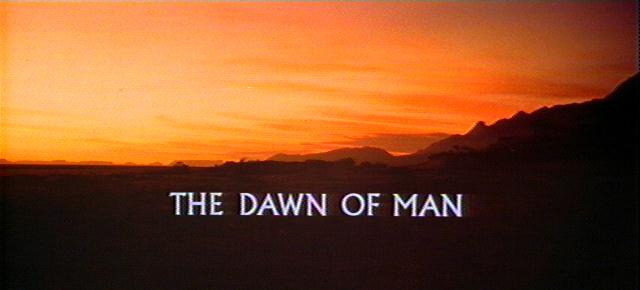 If the singularity of “Man” aimed to bring people together, its mystical qualities aimed to push them forward. “Man” was a term which implied destiny and history; it implied the special qualities of consciousness and knowledge which the heavens had imparted onto “Man” alone. In 2001: A Space Odyssey, the monolith first appears at the discovery of tools and warfare; the scene is entitled “The Dawn of Man.”
But the cry which “Man” made for togetherness and tomorrow was hypocritical, for it omitted one in every two people ever born. In 1789, women were already criticizing the French Republicans for leaving them out of their declaration. The disenfranchisement lasted for many years, and still haunts us today. Many of the world’s great political struggles have indeed been argued in masculine terms. Those who have pushed forward the rights of “Man” have very often failed to push the moral horizon of “Man” beyond men.
And so, at least in English, we have mostly left “Man” behind. What remains? There are a number of alternatives, but none quite captures the full unity of meaning that “Man” once held. “People” is useful but sterile, and its plural status is dead opposite to the singularity of man. In the definite form, as “the people,” it has a both a socialist-flavored connotation of folk life and an unpleasant whiff of ethnic nationalism. Since it is so generic, “people” very often takes on the shape of its container: politically charged as “the voice of the people,” wheedling and belittling as “come on, people,” or divisional as “party people” or “beautiful people.”
Another alternative is “humans.” This is not bad insofar as it reminds us that we are all bound together in an inviolable union of species genetics, but at the same time it hints that we are nothing more than these genetics. It situates us in an ecology, but leaves us as just an “upright mammal wearing pants.” Perhaps because of this, “human nature” is most often invoked as an excuse for our failures to live up to our highest ideals—crime, invidiousness, malice, and greed are unfortunate, but they are, we learn, “just human nature.” And there is something too inert, too factual about “human,” something that prompts a powerless yes-or-no answer—can you imagine the Washington marchers holding signs reading “I Am a Human?”
“Mankind” is a compromise; it tries to retain the universalism of “Man,” and, by bolting on a suffix, to broaden its reach beyond the males which it at first exclusively signified. “One giant leap for all mankind,” Neil Armstrong said on stepping out onto the Moon, and, though NASA was men through-and-through at the time, one hopes that Armstrong’s “mankind” included the world’s women as well.
Then there is “humanity,” which, while clumsy, does have an ambitious universalism. It can mean both the total of the world’s human creatures as well as the condition of being conscious. It links in with “the humanities,” which remain our most advanced method for exploring “humanity” itself. And the word has the added benefit of resonating with a neighborly geniality: to show “humanity” to someone is to treat them on equal terms, as a being worthy of dignity and respect. It’s not a perfect replacement for “Man”— Humanity and Nature doesn’t sound quite right—but it’s as good a place we have to stake a claim on the ambitions that “Man” once had, so that we might continue its incomplete project.
 http://viewshed.matinic.us/2013/12/05/601/