

For several centuries, segregating different forms of traffic by grade separation has been one of the most widely celebrated solutions to the dilemma of how different kinds of transportation can share space. At the beginning of the nineteenth century, Humphry Repton was already beginning to plot out intricately overlapping networks of paths and roads for walkers and carriages.1 Visiting England in 1850, Frederick Law Olmsted was impressed by the treatment of carriage-ways and footpaths in Joseph Paxton’s Birkenhead Park, as well as the elevation of sidewalks above the street in Chester. Seven years later, Olmsted’s solution of separating the transverse streets which ran across Central Park by using trenches and bridges earned him, together with his partner Calvert Vaux, his first commission as a landscape architect.
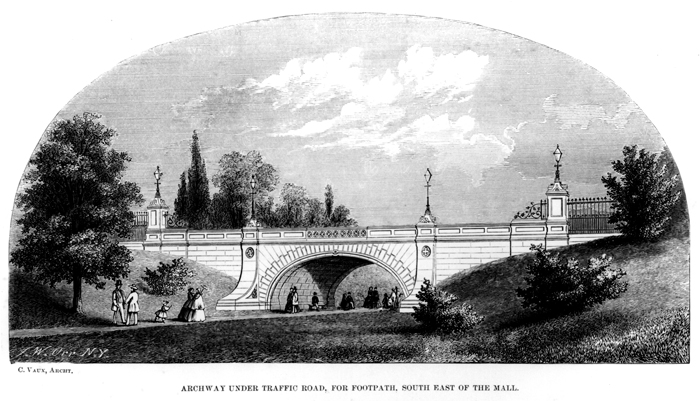
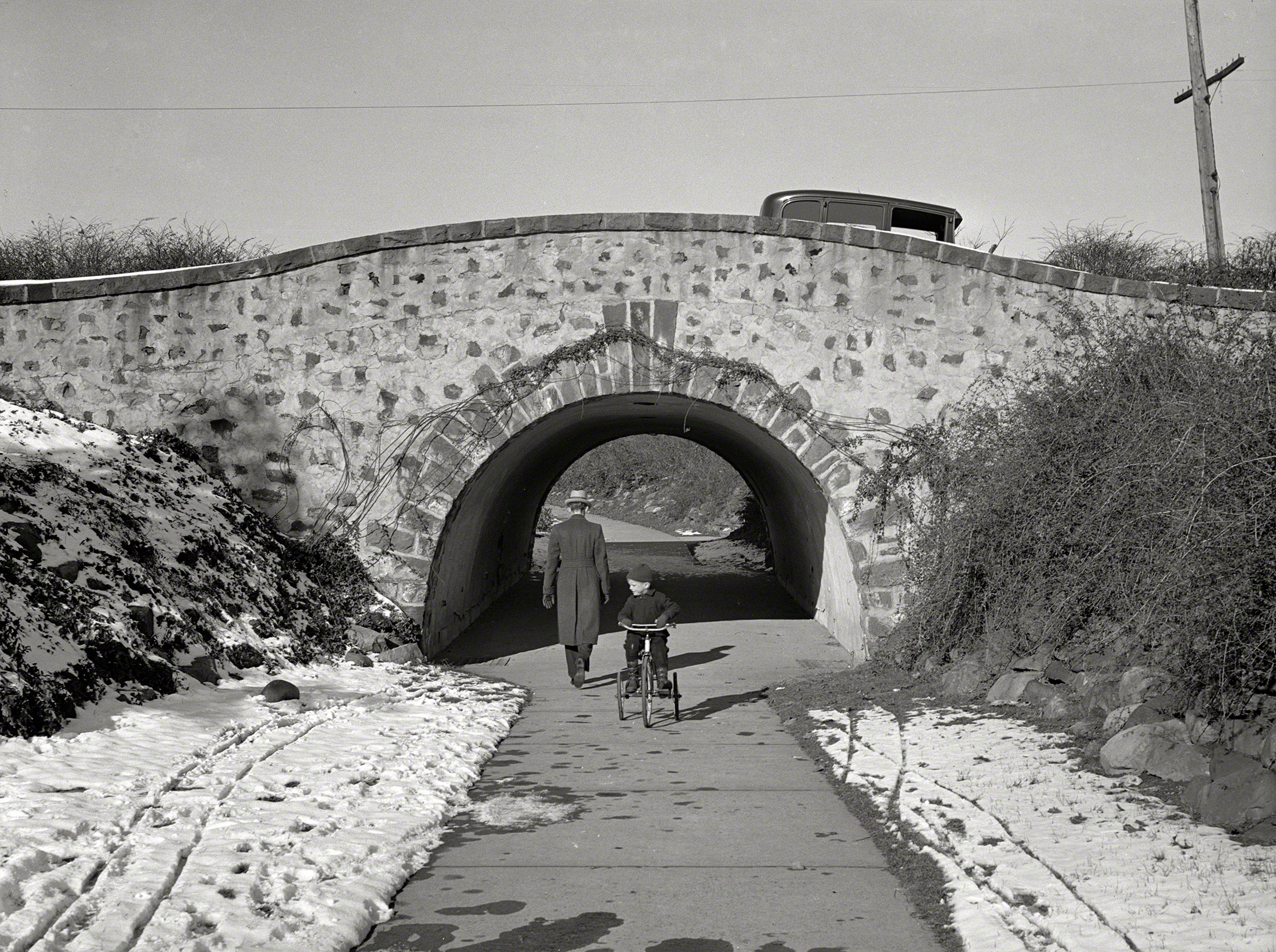
Sixty years, the idea would still be seen as revolutionary, when Clarence Stein, Henry Wright, and Marjorie Sewell Cautley emphasized traffic segregation as one of the principal features of their plan for Radburn, New Jersey.
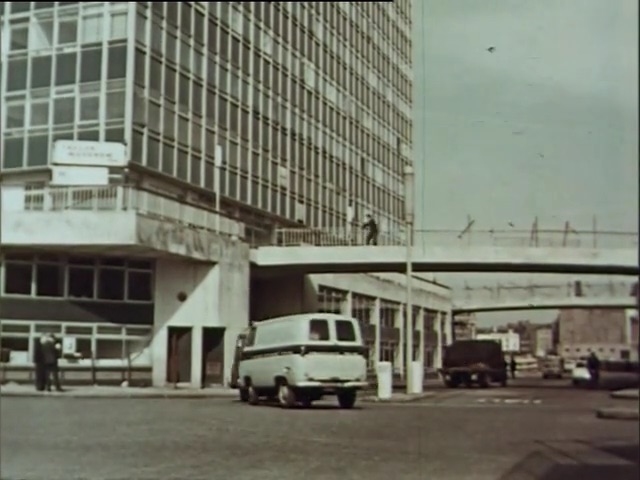
Still later, many urban redevelopment projects turned to “walkways in the sky” in an attempt to transpose the pedestrian accessibility of old town centers into a modernized idiom. A 1963 promotional video for London’s Barbican Estate rhymed proudly: “there never was a plan that got so far / to separate the walker from the car.”
Which makes it all the more interesting that the University of Wisconsin has decided to demolish the pedestrian bridge connecting the Humanities Building to Vilas Hall. The decrepit bridge would cost an estimated $1.5 million, and, citing a decreased volume of foot traffic since the introduction of a crossing signal at East Campus Mall, campus planners decided not to replace it. (Scott Walker’s proposed $250 million-per-mile widening of I-94, meanwhile, will likely find funding.)
It’s an interesting story in the history of city planning. For a very long time, planners regarded pedestrians and automobiles as incompatible creatures, and did everything they could to keep the two separate. Though this urge was almost always intended as a way to encourage pedestrianism and keep it viable and safe in the age of the automobile, some of its results—the controlled-access highway, the criminalization of “jaywalking”—actually tipped the scales even further favor of cars.
Now, planners are finding that they prefer to mix transit together at the same grade, even going so far as to eliminate traffic and pedestrian controls completely in hopes of slowing cars down and encouraging more lively street scenes. They are finding that the street—the “real” street at ground level and not a stylized street in the air—is where people want to be. And, of course, funding for motor traffic now dwarfs spending on pedestrians, bicycles, and transit. Rather than attempting to keep people and cars apart, as has long been the case, we now throw them all together—and hope that the results will be “vibrant” and “exciting” rather than “chaotic” and “treacherous.”
- Stephen Daniels, “On the Road with Humphry Repton,” Journal of Garden History 16, no. 3 (1996). ↩
 http://viewshed.matinic.us/2015/08/05/898/